Have you noticed discoloration of your toenails? Have they become thickened or brittle? If so, you may be experiencing symptoms of a fungal nail infection. For some, having a fungal nail can be embarrassing. Overcome your embarrassment, and get treated.
A puncture wound on the foot is an injury that occurs when a sharp object breaks through the skin and creates a small but deep opening. Common causes include stepping on nails, glass, or other sharp objects. Although these wounds may appear minor on the surface, they can extend into deeper tissues and increase the risk of infection. Prompt care is important because early treatment can influence the healing process and reduce the chance of complications.
Symptoms of a foot puncture wound may include pain, swelling, and bleeding around the injured area. Some individuals may also notice warmth, drainage, or increasing discomfort as signs of infection. Risk factors include walking barefoot, working in environments with sharp debris, having diabetes, and having reduced circulation or nerve sensation. Individuals with certain health conditions may require additional attention because healing can be slower and infections may develop more easily.
Proper care after a puncture wound involves cleaning the area, protecting the injury, and monitoring for changes. Prompt response after an injury can make a significant difference in recovery. Removing dirt and debris, keeping the wound covered, and avoiding pressure on the affected foot can support healing. Medical evaluation is important if the object penetrated deeply, if symptoms worsen, or if there is concern about infection. Ignoring a puncture wound can allow bacteria to enter deeper tissues and create serious problems.
Preventing foot puncture wounds includes wearing protective footwear, maintaining a safe environment, and checking the feet regularly after outdoor activities. Early treatment supports better outcomes and helps protect overall foot health. Paying attention to symptoms and risk factors allows individuals to seek care before complications develop. If you have a puncture wound on your foot, it is suggested that you promptly consult a podiatrist for effective treatment solutions.
Wound care is an important part in dealing with diabetes. If you have diabetes and a foot wound or would like more information about wound care for diabetics, consult with one of our doctors from The Ankle and Foot Clinic of Northern Virginia, PLLC. Our doctors will assess your condition and provide you with quality foot and ankle treatment.
What Is Wound Care?
Wound care is the practice of taking proper care of a wound. This can range from the smallest to the largest of wounds. While everyone can benefit from proper wound care, it is much more important for diabetics. Diabetics often suffer from poor blood circulation which causes wounds to heal much slower than they would in a non-diabetic.
What Is the Importance of Wound Care?
While it may not seem apparent with small ulcers on the foot, for diabetics, any size ulcer can become infected. Diabetics often also suffer from neuropathy, or nerve loss. This means they might not even feel when they have an ulcer on their foot. If the wound becomes severely infected, amputation may be necessary. Therefore, it is of the upmost importance to properly care for any and all foot wounds.
How to Care for Wounds
The best way to care for foot wounds is to prevent them. For diabetics, this means daily inspections of the feet for any signs of abnormalities or ulcers. It is also recommended to see a podiatrist several times a year for a foot inspection. If you do have an ulcer, run the wound under water to clear dirt from the wound; then apply antibiotic ointment to the wound and cover with a bandage. Bandages should be changed daily and keeping pressure off the wound is smart. It is advised to see a podiatrist, who can keep an eye on it.
If you have any questions please contact our office located in Gainesville, VA. We offer the newest diagnostic and treatment technologies for all your foot and ankle needs.
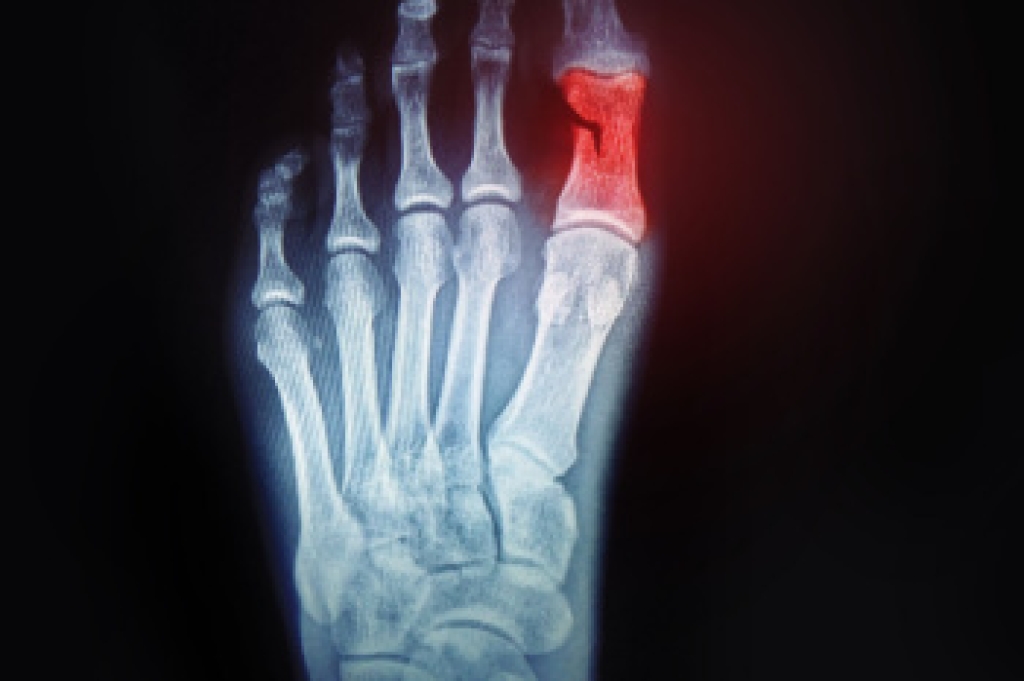
A broken toe can happen in an instant after stubbing your foot or dropping something heavy on it. Even though the injury can be very painful, some people are still able to walk on it. This makes it difficult to know whether a bone is actually broken. A broken toe can cause swelling, bruising, and tenderness. It also causes pain that can get worse while walking or wearing shoes. In some cases, the toe looks crooked or out of place. A more serious injury can leave part of a bone exposed, which requires immediate medical attention. A podiatrist can examine the injured toe and determine with an X-ray whether the damage involves a fracture or a bruise.
Stubbing a toe against furniture and dropping a heavy object on the foot are leading causes of toe fractures. Sports injuries and falls can also cause a toe to break. Tiny cracks in the bone, called stress fractures, can develop after repeated strain from certain activities, like running. People with weakened bone density have a greater chance of breaking a toe from an injury than someone with stronger bones. Ignoring a broken toe can allow the bones to heal in the wrong position. This can lead to lasting pain, difficulty wearing shoes, and problems with balance while walking.
A podiatrist can provide an exam to determine the type and severity of the injury in order to recommend the best treatment plan. Care includes reviewing symptoms, examining the position of the toe, and ordering X-rays or other imaging. Some broken toes heal with protection and close monitoring, while others require a procedure to restore proper alignment. Surgery is recommended for certain severe fractures. Early diagnosis helps reduce the risk of long-term complications and supports proper healing. If you have broken a toe, it is suggested that you schedule an appointment with a podiatrist for an accurate diagnosis and appropriate treatment.
Although most people try to avoid foot trauma such as banging, stubbing, or dropping heavy objects on their feet, the unfortunate fact is that it is a common occurrence. Given the fact that toes are positioned in front of the feet, they typically sustain the brunt of such trauma. When trauma occurs to a toe, the result can be a painful break (fracture).
Symptoms of a Broken Toe
Throbbing pain
Swelling
Bruising on the skin and toenail
The inability to move the toe
Toe appears crooked or disfigured
Tingling or numbness in the toe
Generally, it is best to stay off of the injured toe with the affected foot elevated.
Severe toe fractures may be treated with a splint, cast, and in some cases, minor surgery. Due to its position and the pressure it endures with daily activity, future complications can occur if the big toe is not properly treated.
If you have any questions, please feel free to contact our office located in Gainesville, VA. We offer the newest diagnostic and treatment technologies for all your foot care needs.
The big toe is also known as the great toe, and is considered to be one of the most important joints in the body. It has various functions, including walking heel to toe, and balancing while running, jumping, or dancing. There is a joint on the bottom of the big toe that is known as the tarsometatarsal (TMT) joint, and the proximal Interphalangeal joint is found across from it. These joints can become damaged from participating in high-impact sporting activities, and will often become painful and swollen. Another form of discomfort occurring in the big toe is known as gout. This develops as a result of excess uric acid in the blood that can form crystals in the joints of the big toe, often causing debilitating pain. Extensor tendonitis is a foot condition that may happen from having tight calf muscles, and the pain is felt when the big toe is extended. Many people have osteoarthritis of the joints in the big toe, and a bunion may gradually develop, if not promptly treated. If you have pain in your big toe, it is strongly urged that you speak with a podiatrist who can properly diagnose and treat toe pain.
Most severe toe pain is caused due to a sports injury, trauma from dropping something heavy on the toe, or bumping into something rigid. Other problems can develop over time for various reasons.
Toe pain can be caused by one or more ailments. The most common include:
Trauma
Sports injury
Wearing shoes that are too tight
Arthritis
Gout
Corns and calluses
Hammertoe
Bunions
Blisters
Ingrown toenails
Sprains
Fractures (broken bones)
Dislocations
When to See a Podiatrist
Severe pain
Persistent pain that lasts more than a week
Signs of infection
Continued swelling
Pain that prevents walking
Diagnosis
In many cases the cause of toe pain is obvious, but in others, a podiatrist may want to use more advanced methods to determine the problem. These can range from simple visual inspections and sensation tests to X-rays and MRI scans. Prior medical history, family medical history, and any recent physical traumatic events will all be taken into consideration for a proper diagnosis.
Treatment
Treatments for toe pain and injuries vary and may include shoe inserts, padding, taping, medicines, injections, and in some cases, surgery. If you believe that you have broken a toe, please see a podiatrist as soon as possible.
If you have any questions please contact our office located in Gainesville, VA. We offer the newest diagnostic and treatment technologies for all your foot and ankle needs.
A foot stress fracture is a small crack in the bone that develops due to repetitive force rather than a single injury. These fractures commonly affect the metatarsal bones and are frequently seen in runners, athletes, and individuals who engage in high-impact activities. Unlike acute fractures, stress fractures form gradually when muscles become fatigued and are unable to absorb shock effectively. As a result, the bones take on more stress, leading to tiny cracks that can worsen without proper care.
Symptoms of a foot stress fracture often begin as mild discomfort and progress into more noticeable pain. The pain typically intensifies while walking, running, or standing for long periods of time. It may decrease with rest, but return once activity resumes. Swelling, tenderness, and localized pain in a specific area of the foot are common signs. Some individuals may also notice slight bruising or difficulty bearing weight as the condition advances. Early detection is important to prevent the fracture from becoming more severe.
The primary cause of foot stress fractures is overuse, particularly from repetitive high-impact movements, such as running, jumping, or sudden increases in activity levels. Training errors, such as increasing intensity too quickly, can place excessive strain on the bones. Wearing inadequate footwear that does not provide proper support or cushioning can also contribute to the problem. Environmental factors, including hard surfaces, may increase the amount of stress placed on the foot during activity.
Several risk factors can raise the likelihood of developing a stress fracture. Females are associated with a higher risk, particularly in athletes with hormonal imbalances or reduced bone density. Low levels of vitamin D can weaken bones and make them more susceptible to injury. Other factors include poor nutrition, improper biomechanics, and a history of previous stress fractures. If you have symptoms of a foot stress fracture, it is suggested that you consult a podiatrist for effective relief and treatment solutions.
Stress fractures are the result of repetitive force being placed on the bone. Since the lower leg and feet often carry most of the body’s weight, stress fractures are likely to occur in these areas. If you rush into a new exercise, you are more likely to develop a stress fracture since you are starting too much, too soon. Pain resulting from stress fractures may go unnoticed at first, however it may start to worsen over time.
Risk Factors
Gender – They are more commonly found in women compared to men.
Foot Problems – People with unusual arches in their feet are more likely to develop stress fractures.
Certain Sports – Dancers, gymnasts, tennis players, runners, and basketball players are more likely to develop stress fractures.
Lack of Nutrients – A lack of vitamin D and calcium may weaken the bones and make you more prone to stress fractures
Weak Bones – Osteoporosis can weaken the bones therefore resulting in stress fractures
Stress fractures do not always heal properly, so it is important that you seek help from a podiatrist if you suspect you may have one. Ignoring your stress fracture may cause it to worsen, and you may develop chronic pain as well as additional fractures.
If you have any questions please contact our office located in Gainesville, VA. We offer the newest diagnostic and treatment technologies for all your foot and ankle needs.